





Professional Salla Store Design in Saudi Arabia
Overview of Professional Salla Store Design in Saudi Arabia
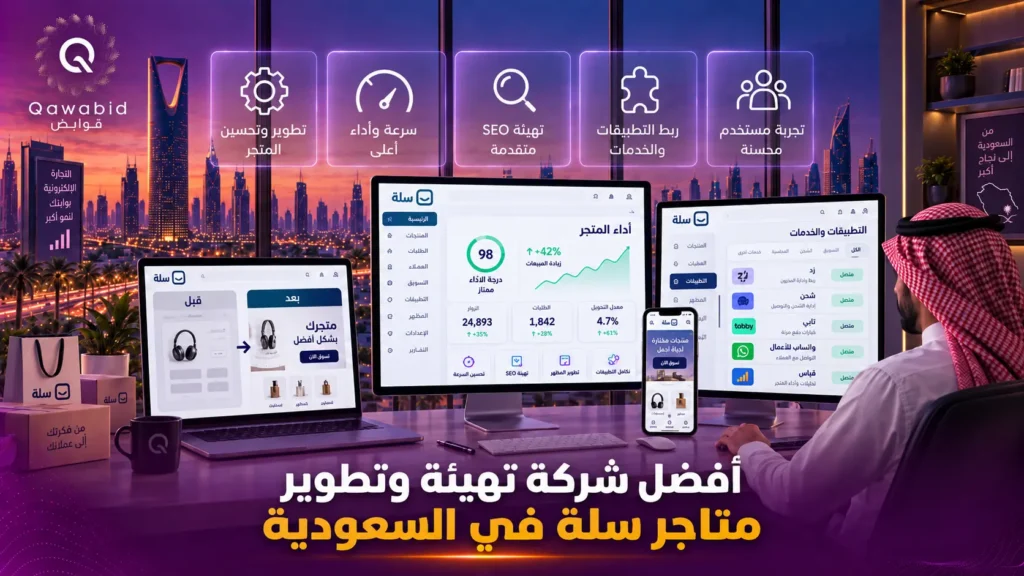
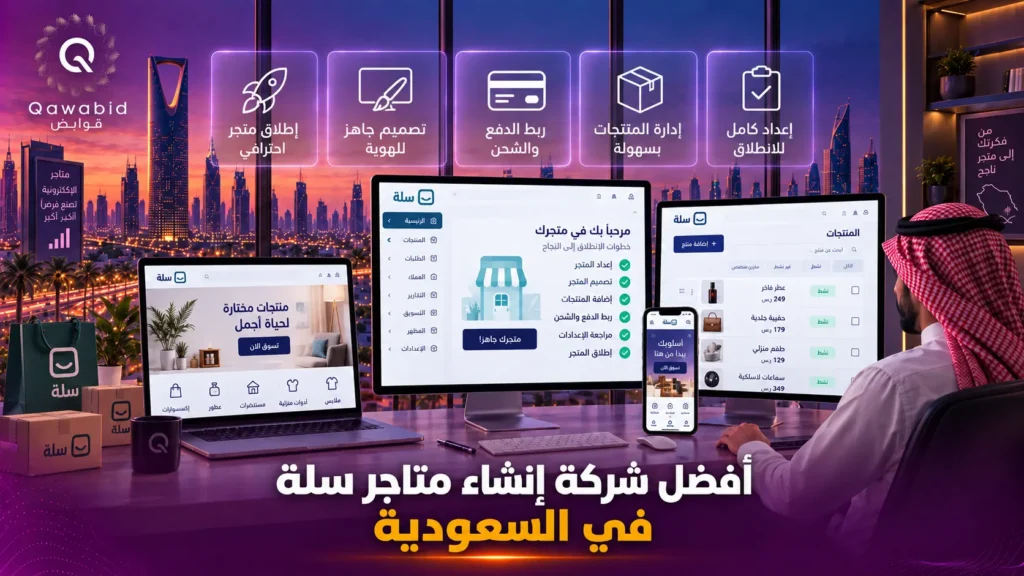
Professional Salla store design in Saudi Arabia has become one of the most important steps for businesses and brands that want to enter e-commerce in an organized and professional way, especially as more customers rely on online shopping and compare stores through their mobile phones before making a purchase decision.
Creating a store on the Salla platform is not simply about choosing a theme and adding products. A successful online store requires a complete experience that begins with brand identity and category organization, continues through product pages and easy navigation, and ends with the cart, checkout, shipping, and customer service. Every step in this journey can directly affect conversion rates and sales.
A business may offer excellent products at competitive prices and still lose customers because of an unclear design, poor images, complicated categories, or product pages that do not provide the information customers need. For this reason, store design should be built around commercial goals rather than visual appearance alone.
Saudi customers also rely heavily on mobile devices, so the mobile experience should be considered from the beginning. Users need to reach products quickly, read details easily, view images, select options, and complete their orders with as few unnecessary steps as possible.
Salla store design also differs depending on the industry. A perfume store requires a different approach from a fashion store. An electronics store needs organized specifications and model information, while a gift store needs categories based on occasions. Building-material stores require technical information and shipping options suitable for the nature of their products.
The store should also be ready for marketing after launch. Product pages should be suitable for advertising campaigns, the category structure should support search engine optimization, and suitable analytics, tracking, and integration tools should be prepared according to project requirements.
Qawabid Marketing Services helps businesses in Saudi Arabia professionally design and prepare Salla stores, starting with business, audience, and competitor analysis, then moving to store interface design, category organization, product and content preparation, and finally SEO, advertising campaigns, analytics, and conversion rate optimization according to the project scope.
What Is Professional Salla Store Design?
Professional Salla store design means creating an interface and shopping experience that helps customers understand the brand, reach products, and make purchase decisions easily.
Design is not limited to colors, images, and fonts. It also includes homepage structure, category organization, product-page layout, button placement, and how offers and policies are presented.
It also includes the mobile experience and how quickly customers can access information.
The ultimate goal is to turn the store into a sales tool rather than just an online showcase.
Every element inside the store should have a clear function that either serves the customer, increases trust, or moves the customer one step closer to completing an order.
Why Do Businesses Need a Professional Online Store?
An e-commerce store gives a business a sales channel that operates around the clock and can be accessed by customers from different cities served by the business.
It also gives the brand more space to showcase products compared with social media.
Customers can search, compare, read details, review options and policies, and make informed decisions before purchasing.
Most importantly, the store is a digital asset that can be connected to advertising, search engines, and analytics tools.
When built correctly, it becomes a core part of business growth rather than just an additional channel.
The Difference Between a Basic Store and a Professional Store
A basic store may contain products, prices, and a purchase button, while a professional store builds a complete customer journey.
The difference appears in category organization, image quality, search usability, product pages, trust elements, and checkout experience.
It also appears in mobile compatibility and speed.
A professional store is also more prepared for advertising and SEO.
When data is analyzed later, there is a clear structure that can be optimized rather than having to rebuild the store from scratch.
Studying the Project Before Designing a Salla Store
The first step is understanding the business before entering the design stage.
The type of products, quantity, prices, audience, and target cities should be identified.
Sales methods, shipping, and inventory should also be understood.
It should also be determined whether the store will start with a limited number of products or a large inventory.
This information directly affects the structure.
A store with twenty products does not need the same organization as a store with one thousand products.
Target Audience Analysis
The design should suit the actual customer rather than only the business owner’s personal taste.
Age, audience type, and decision-making behavior should be analyzed.
If the audience is searching for a technical product, they will need clear specifications and comparisons.
If the product depends heavily on appearance and experience, such as fashion or perfume, visual identity, imagery, and visual content become more important.
The better the audience is understood, the more relevant the store experience becomes.
Competitor Analysis
Competitor research helps identify the level of experience customers expect.
Competitor stores, category structures, product pages, and offers should be reviewed.
Their mobile experience should also be analyzed.
What do they do well?
What problems can be avoided?
The goal is not to copy a competitor’s design but to create a clearer and more distinctive experience.
This analysis can also reveal opportunities in product presentation, content, or category structure.
Building a Salla Store Brand Identity
Visual identity is a fundamental part of store design.
It includes the logo, colors, typography, imagery, and banner style.
It should also remain consistent with social media accounts and packaging.
Customers should feel that they are dealing with the same brand whether they move between Instagram, the store, or an advertisement.
This consistency increases brand recognition and creates a stronger sense of professionalism.
Choosing the Right Colors
Colors should support both the brand and usability.
Using too many colors inside the interface is usually not recommended.
A primary color and a supporting color can be selected along with clear backgrounds.
Button colors should also make important actions easy to notice.
Color is not only an aesthetic element; it also guides user attention throughout the page.
Choosing Fonts
Arabic fonts should be clear and easy to read on mobile devices.
Decorative fonts should generally be avoided for long-form content.
A distinctive font can be used for headings, while a simpler font can be used for body copy.
Font sizes should also be appropriate.
Text that is too small becomes difficult to read, while oversized typography consumes space and weakens page organization.
This balance affects user experience more than many store owners expect.
Choosing a Salla Store Theme
The theme should be selected according to the size of the store and the type of products.
The most visually attractive theme is not always the best option.
Navigation, category presentation, product-page design, and mobile experience should all be reviewed.
Future expansion should also be considered.
If the business plans to add many products, the structure should support growth without becoming disorganized.
Customizing the Theme
Using the theme exactly as provided can make the store look similar to many others.
For this reason, it should be customized as much as possible within the available capabilities.
Colors, images, section order, and banners can be adjusted.
The homepage can also be configured according to business goals.
The goal is not to change everything, but to make the theme reflect the brand and support the customer journey.
Homepage Design
The homepage should quickly answer one question: What does this store sell?
A main banner can be followed by important categories, featured products, or best sellers.
Real benefits or offers can also be highlighted.
The page should not be overloaded with dozens of sections.
Every section should have a clear purpose.
The goal is to direct customers toward products rather than keep them on the homepage for as long as possible.
Designing the First Section of the Page
The first area customers see is very important.
It should include a clear message, an appropriate image, and a call to action.
Users may be directed to a collection, category, or offer.
Generic marketing statements that do not explain anything should be avoided.
Customers need to understand the store’s value within seconds.
Banner Design
Banners should be simple and readable on mobile devices.
A short headline is usually stronger than placing a full paragraph inside an image.
The image should not make the text difficult to read.
Different sizes can be designed for different screens when needed.
Banners should also be updated when campaigns end so customers do not continue seeing expired offers.
Organizing Categories
Categories help customers find products.
They should be structured according to how the target audience searches.
Main categories and subcategories may be created.
However, over-segmentation should be avoided.
Dozens of small categories can make the experience more complicated.
The goal is to help customers reach products with minimal effort.
Designing the Navigation Menu
The store menu should be clear.
Main categories and important pages should be included.
There is no need to place dozens of links in the menu.
The more complicated it becomes, the harder it is for customers to find products.
The menu should also be tested on mobile because its behavior differs from desktop.
Designing Category Pages
A category page is not simply a list of products.
It can contain a clear heading and a short description when needed.
Products should also be arranged logically.
Images and prices should be displayed in a way that makes comparison easy.
Category pages are also important for SEO and advertising campaigns, so they deserve attention similar to product pages.
Product Page Design
The product page is one of the most important points in the purchasing journey.
It should contain clear images, product name, price, options, and description.
The Add to Cart button should also be clearly visible.
Information that helps the customer make a decision should be provided.
Products that require specifications should include them.
Products that depend on appearance should include suitable images and videos.
Writing Product Titles
Product titles should be clear and easy to read.
Internal naming conventions that customers do not understand should be avoided.
Important information such as size or type may be added if needed to differentiate the product.
A consistent naming structure should also be maintained.
This improves store appearance and supports internal search and SEO.
Writing Product Descriptions
Descriptions should explain benefits and specifications.
They can begin with a short overview followed by more detailed information.
Generic claims such as “the best product with high quality” should be avoided if they do not provide useful information.
Customers want answers to their questions.
The less uncertainty they have, the more likely they are to make a purchase.
Original content is also preferable to copying supplier descriptions.
Product Photography
Images are the customer’s substitute for physically touching the product.
They should therefore be clear and accurate.
Multiple angles can be shown.
The product can also be photographed during use.
In some categories, showing real product size is especially important.
Colors and product details should remain as realistic as possible so customer expectations match reality.
Using Lifestyle Images
Lifestyle images help customers imagine using the product.
Furniture can be shown inside a real room, fashion items on a model, or a product in an actual usage situation.
These images complement basic product photography rather than replace it.
The strongest product pages often combine clear product images with contextual lifestyle photography.
Adding Product Videos
Video can explain details that images cannot show.
This may include material, movement, or how the product is used.
Unboxing or product-experience videos can also be included.
Video is especially useful for new products or products requiring explanation.
The same videos can later be reused in advertising and social media.
Organizing Product Options
Options such as color and size should be easy to understand.
Each option should be connected to the correct stock and price where applicable.
Images linked to each color can also be used when possible.
Customers should not have to guess.
Every unclear step increases the likelihood of leaving the page.
Displaying Size Information
Clothing and footwear stores need clear size charts.
They should be easy to access from mobile devices.
Simple measurement instructions can also be provided.
This reduces hesitation.
It may also reduce exchanges caused by customers selecting the wrong size.
Highlighting the Price
The price should be clearly visible.
If there is a genuine discount, the previous and current price can be shown in an understandable way.
The design should not make the price difficult to read.
Store pricing should also match advertising campaigns.
Any difference can reduce trust.
Displaying Availability
If a product is unavailable, this should be clearly indicated.
Advertising campaigns should not continue promoting products that are out of stock.
Alternative products may also be suggested.
Availability management affects both customer experience and marketing efficiency.
Designing the Add to Cart Button
The Add to Cart button should be easy to find on mobile devices.
It should not disappear among many other elements.
Its color, size, and position help guide the customer.
Required product options should also be easy to select before adding the item.
These small details can affect conversion rates.
Cart Page Design
The cart should present products, quantities, and prices clearly.
Customers should be able to update quantities easily.
Complementary recommendations may be included if useful.
However, unnecessary distractions should be avoided.
At this stage, the customer is close to buying, so the primary goal is helping them complete the order.
Improving Checkout
Checkout is one of the most sensitive parts of the purchasing journey.
Every unnecessary field can create friction.
Payment and shipping methods should be clearly explained.
The full process should also be tested.
Any error in payment or shipping address handling can result in losing a customer who was already ready to buy.
Preparing Payment Methods
Suitable payment methods should be configured according to the options and integrations available for the project.
They should be tested before launch.
They should also be clearly displayed to customers.
Trust in the payment process is essential, especially for new stores.
Preparing Shipping
Shipping should be configured based on the type of products and target locations.
Cost and expected delivery time should be clearly explained.
Information should also be realistic.
Promises that cannot be fulfilled by the operations team can negatively affect ratings and repeat purchases.
Designing a Free Shipping Experience
Free shipping can be used to improve conversion or increase average order value when the numbers make sense.
A minimum order threshold can be set.
The requirement should be clearly displayed inside the store.
However, the actual shipping cost should always be calculated rather than treating “free shipping” as cost-free for the business.
Preparing Store Policies
A professional store needs clear policies.
These may include shipping, exchange, returns, privacy, and terms according to the nature of the project.
These pages help build trust and reduce repetitive questions.
They should be written specifically for the business and its relevant obligations rather than copied randomly from another store.
Designing the About Us Page
The About Us page helps customers understand the brand.
The business story and unique value can be presented.
Real photos may also be used when appropriate.
New customers want to feel that they are dealing with a real business.
This page is especially important for stores that are still building trust.
Designing the Contact Us Page
Suitable communication channels should be provided.
Email, phone, or WhatsApp may be added depending on the business.
Working hours can also be displayed.
If the business has a physical location, relevant information can be included.
Easy access to customer service increases trust even when customers do not actually need to contact the business.
Designing the FAQ Page
Frequently asked questions about shipping, payment, products, and returns can be collected.
They should be presented clearly and concisely.
This page reduces pressure on customer service.
It also helps hesitant customers make decisions without waiting for a response.
Mobile-First Experience
Professional Salla store design in Saudi Arabia should place mobile users first.
Every page should be tested on a small screen.
Is the menu easy to use? Is the text clear? Do images load quickly? Are buttons large enough?
Checkout should also be reviewed from mobile devices.
A poor mobile experience means losing a large portion of traffic coming from social platforms.
Improving Store Speed
Speed affects both user experience and conversion.
Appropriately sized images should be used and unnecessary elements reduced.
Any apps or code that may affect performance should also be reviewed within the available capabilities.
The goal is to create the fastest experience possible.
Every additional delay may cause some customers to leave before viewing the product.
Optimizing Images
Images should balance quality and file size.
Large files slow down the store.
However, excessive compression may make products look poor.
Images should therefore be prepared using appropriate dimensions and quality levels.
Suitable image formats should also be used when available.
Store Search
If the store contains many products, search becomes especially important.
Product names should be clear.
Search terminology used by customers should also be considered.
A user who already knows the product name should not have to navigate several categories to find it.
Effective search reduces the time required to reach a purchase.
Filters
Filters are useful for stores with large product catalogs.
Products may be filtered by price, type, size, or other attributes.
However, only filters that customers actually care about should be used.
Adding too many unused options makes the page more complicated.
Adding Best-Selling Products
Best sellers can be highlighted on the homepage or within categories.
These products carry implicit social proof because they already generate strong demand.
They also help new customers understand the brand’s core products.
The list should be updated based on actual data rather than remaining static when sales patterns change.
Adding New Products
A New Arrivals section helps returning customers discover recent additions.
It can also support product-launch campaigns.
The same section may be promoted through email and social media.
However, it should not take too much space if new products are not a commercial priority.
Adding Offers
An Offers section can be created when discounts are used strategically.
It should be kept updated.
Expired offers reduce trust.
The entire store should also not become a collection of discount banners that teach customers never to buy at full price.
Bundles and Packages
Bundles are one of the best ways to increase order value.
Products that complement one another can be combined.
Bundles may also be created for occasions or specific use cases.
The value should be clearly explained.
A good bundle helps the customer while increasing average cart value.
Cross-Selling Inside the Store
Complementary products can be recommended.
For example, an accessory may be suggested alongside the main product.
Recommendations should not be random.
Customers respond better when there is a clear relationship between the products.
Order data can later be used to improve these recommendations.
Upselling
A higher-tier version or larger size may be offered when there is real added value.
The difference should be clearly explained.
The goal is to help customers choose the most suitable option rather than simply push them toward the most expensive one.
This makes upselling a tool for increasing order value without damaging the experience.
Preparing a Salla Store for Search Engines
SEO should be considered during the design stage.
Categories and page titles should be organized clearly.
Product descriptions should also be written properly.
Images and internal links should receive attention.
Together, these elements build a strong foundation that can be developed over time.
Keyword Research
Keywords related to products and categories should be analyzed.
They can then be distributed across relevant pages.
The main keyword for each page should match user intent.
Product pages usually target more specific terms, while category pages target broader terms.
Keyword stuffing that reduces readability should be avoided.
Optimizing Product Page Titles
Page titles should clearly describe the product.
Information that helps differentiate similar products may be included.
Very similar or duplicated titles should be avoided.
This helps both users and search engines.
A consistent naming structure should also be maintained across the store.
Optimizing Meta Descriptions
Meta descriptions can be created for important pages when the platform allows it.
The description should explain what users will find on the page.
The same description should not be reused across every page.
Customization is especially useful for important commercial pages.
Optimizing Categories for SEO
Categories can target strong commercial keywords.
Relevant titles and content should therefore be prepared.
Products should also be organized properly.
Articles can link to these pages.
This helps transform a category page into an important commercial landing page rather than simply a product list.
Creating Blog Content
A blog can attract customers through questions and comparison searches.
Buying guides and product comparison articles can be created.
Articles can then link to relevant categories.
This attracts traffic at different stages of the customer journey.
The same content can also be repurposed for social media.
Improving Internal Links
Internal links connect articles with categories and products.
They can also connect related products with one another.
This helps customers discover more products.
It also helps search engines understand the store structure.
Links should always be natural and useful.
Preparing the Store for Advertising
The store should be ready before advertising budgets are activated.
Prices, stock, and pages should be checked.
Suitable analytics and tracking tools should be configured based on available capabilities and project scope.
Pages used as landing pages should also be reviewed.
Strong advertising campaigns need a strong store experience to complete the conversion.
Preparing the Store for Meta Ads
If the store will use Instagram and Facebook, suitable integrations and available measurement events can be configured according to the project.
A product catalog can also be organized when required.
Images and titles should be suitable for advertising.
Accurate data supports better campaign management and retargeting.
Preparing the Store for TikTok Ads
TikTok usually sends mobile traffic.
Product-page speed is therefore important.
Available measurement tools should also be configured according to project integrations.
The product page should match the message shown in the video.
If an advertisement highlights a particular benefit, the customer should find the same benefit clearly presented on the page.
Preparing the Store for Snapchat Ads
The store should be prepared for mobile traffic.
Suitable measurement tools can also be configured according to available capabilities.
Campaigns can be directed to specific product pages rather than the homepage when this is more appropriate.
Every step that reduces distraction increases the value of paid traffic.
Preparing the Store for Google Ads
Google Ads requires pages that match what users are searching for.
Product keywords can direct customers to product pages.
Category keywords can direct them to category pages.
Data and product information should also be accurate.
This structure also benefits SEO.
Landing Pages
Dedicated pages can be created for offers and campaigns.
A landing page is usually more focused than the homepage.
It may feature a specific group of products or a seasonal offer.
Unnecessary distractions can be reduced.
Performance can also be measured independently when tracking tools are available.
Analytics Tools
Data helps improve the store.
Suitable analytics tools can be used to monitor traffic and conversions.
Sales sources can be analyzed.
Pages receiving high traffic but generating few orders can also be identified.
This data guides optimization after launch.
Conversion Rate
Conversion rate is one of the most important store metrics.
If it is low, the solution is not always to increase advertising spend.
Product pages, pricing, shipping, trust, and checkout experience should be reviewed.
Even a small improvement in conversion can generate significant growth when traffic volume is high.
Conversion Rate Optimization (CRO)
CRO is an ongoing process for improving store performance.
New images, headlines, or layouts can be tested.
The cart and checkout can also be reviewed.
Data should be used instead of relying only on personal opinions.
The goal is to convert a larger percentage of existing traffic into sales.
Average Order Value
AOV is an important profitability metric.
It can be increased through bundles and complementary products.
A free-shipping threshold can also be used when appropriate.
Increasing order value helps the store absorb higher customer acquisition costs.
This creates more room for advertising growth.
Preparing the Store for Retargeting
Product-view and add-to-cart data can be used for retargeting within available tools and platform policies.
These campaigns help reach people who have already shown interest.
Different messages should be used depending on the customer’s stage.
Someone who only viewed a product needs a different message from someone who added it to the cart.
Recovering Abandoned Carts
Available tools or suitable integrations can be used to follow up on abandoned carts.
However, the reasons should also be analyzed.
If shipping cost is the issue, reminders alone will not solve the problem.
Cart recovery should work alongside checkout optimization.
Connecting the Store to WhatsApp
WhatsApp can help answer customer questions.
A clear button can be placed in suitable locations.
Opening messages can also be customized based on the product or page.
However, a team should be responsible for responding.
Slow WhatsApp service can still cause customers to leave even when the store itself is strong.
Connecting the Store to Social Media
Brand accounts should be connected to the store.
Customers can be directed from social content directly to relevant products.
The visual identity should also remain consistent.
Customers may move between several channels before purchasing.
All channels should therefore present a unified image of the brand.
Connecting the Store to a CRM
Some stores need CRM more than others.
It may be useful for organizing customers, special orders, or B2B clients.
Integration should be based on the systems being used and the project scope.
The goal is to use customer data to build long-term relationships rather than treating every order as an isolated transaction.
Professional Business Email
A professional email address can be used for customer service, correspondence, and management.
This creates a more professional image.
As part of Qawabid Marketing Services, professional business email accounts can be provided according to project scope.
Accounts and permissions can also be organized based on the structure of the team.
Domain
The domain is part of the brand.
It should be easy to remember and closely related to the store name.
As part of Qawabid Marketing Services, a suitable domain and hosting solution can be provided when needed according to the project scope.
The right solution is selected based on store requirements and integrations.
Inventory Management
Store design should work with the inventory-management process.
An unavailable product should not appear ready for purchase unless a pre-order system is being used.
Inventory should also be updated regularly.
This prevents order cancellations and improves customer experience.
It also helps the advertising team avoid spending budget on unavailable products.
Order Management
The process for managing orders should be clear after an order is received.
Who receives the order? Who prepares it? How is its status updated?
The more organized the operation, the fewer mistakes occur.
The post-purchase experience affects reviews and repeat purchases just as much as pre-purchase design.
Customer Service
A professional store requires a team that understands both products and policies.
They should be able to answer questions quickly.
Responses to common questions can also be prepared.
Human communication should still be available when the situation requires it.
Strong customer service can convert hesitant visitors into buyers.
Loyalty Programs
If the products are suitable for repeat purchasing, loyalty programs can be used within available solutions.
The program should be explained clearly.
The goal is to increase repeat purchases.
However, a loyalty program cannot compensate for a weak product or poor service.
The core experience must be strong first.
Ratings and Reviews
Authentic reviews help customers make decisions.
Buyers can be encouraged to leave ratings.
Reviews can also be displayed on product pages according to available tools.
Fake reviews should never be used.
Customer reviews are among the strongest trust elements in e-commerce.
Protecting Customer Data
Customer data should be handled carefully.
Unnecessary information should not be collected.
Permissions within the team should also be controlled.
Relevant policies and regulations related to the type of business and data should be followed.
Information security is part of the customer experience and trust.
Protecting the Salla Store Account
Primary accounts should remain under the ownership of the business owner.
Employees or the implementing company should only receive the permissions they need.
Suitable security measures should also be used.
Login credentials should not be shared in an unorganized way.
The store account is an important digital asset and should be treated as part of the company’s assets.
Testing the Store Before Launch
A complete test should be performed before advertising begins.
The store should be opened on both mobile and desktop.
Search, categories, products, and product options should be tested.
A test order should also be completed where project settings allow it.
Communication channels should also be tested.
This stage helps identify errors that could become expensive after campaigns begin.
Testing Payment Methods
Payment options should be tested to make sure they work as expected.
The information displayed to customers should also be reviewed.
Any payment problem directly affects sales.
For this reason, it is not enough to assume an integration is correct simply because the settings look correct in the dashboard.
Testing Shipping
Cities, fees, and options should be checked.
What customers see after entering their address should also be reviewed.
These details require real testing.
Any pricing or coverage issues should be identified before launch.
Mobile Testing
Every page should be reviewed from a mobile device.
This includes the homepage, categories, product pages, cart, and checkout.
Buttons and links should also be tested.
This is essential because mobile is the primary experience for many e-commerce stores.
Content Review
Product names, descriptions, headings, and policies should be proofread.
Temporary text or placeholder images should be removed.
A professional store should be fully ready when customers first visit it.
Any incomplete area can reduce trust.
Price Review
Prices, discounts, and product options should be checked.
Currencies and displayed information should also be reviewed.
If an advertising campaign is prepared, the advertised price must match the store price.
This prevents complaints and confusion.
Reviewing Social Media Links
All links should work correctly.
Only official brand accounts should be connected.
If a customer clicks Instagram and reaches the wrong account, they may question the credibility of the brand.
These details may appear minor, but their impact can be significant.
Store Launch
After testing, the store can be officially launched.
The launch may coincide with a content or advertising campaign.
However, it is usually better not to begin with very high ad spend from the first hour.
The business can start gradually while monitoring orders and operations.
This allows any problems to be identified quickly before customer volume increases.
Post-Launch Stage
Launch is not the end of the project.
The first few weeks provide real performance data.
Pages, sales, and products can be analyzed.
There may be a need to adjust page order, product descriptions, or offers.
These natural improvements help strengthen the store over time.
Analyzing Best-Selling Products
Products generating the highest number of orders should be identified.
The reasons for their success can then be analyzed.
Is it the price? Content? Demand?
This data can be used to improve campaigns.
Successful products can also be highlighted more prominently inside the store.
Analyzing Low-Selling Products
A product that does not sell is not necessarily a bad product.
The page may be weak or the images may not be strong enough.
The price may be unsuitable or the audience may not understand its benefits.
The reason should be analyzed before deciding to remove the product.
Design and content can make a significant difference.
Designing a Salla Fashion Store
Fashion stores need strong imagery and an easy experience for sizes and colors.
Details and material should also be highlighted.
Videos featuring models may be used.
Exchange policies are also important to customers.
Visual identity plays a major role in this sector.
Designing a Salla Perfume Store
Perfume stores need an elegant identity and descriptions that help customers imagine the fragrance.
Categories may be organized by fragrance type or use.
Notes and ingredients can be displayed according to available product information.
UGC and customer reviews can help reduce hesitation.
Designing a Salla Electronics Store
Electronics stores need organized specifications.
Comparisons between models should also be easy.
Unboxing videos may be useful.
Warranty information and policies should be clear.
In this sector, information and accuracy are often more important than relying only on aesthetic design.
Designing a Salla Gift Store
Gift stores need categories based on occasions.
These may include graduation gifts or other occasions depending on the products.
Packaging can also become part of the selling experience.
Gift and personalization options can be displayed if available.
This helps customers choose instead of browsing through unorganized products.
Designing a Salla Building Materials Store
This sector needs organized specifications and use cases.
Customers may need to know dimensions, type, or quantity.
Delivery options are also important.
Product pages should contain detailed information.
Educational content and SEO can also play an important role in attracting customers.
Designing a Salla Beauty and Care Store
Beauty and care stores need usage information and ingredient details based on approved product information.
Unsupported treatment claims should be avoided.
Products can also be organized by use case or category.
Reviews and educational content help build trust.
Designing a Salla Luxury Products Store
Luxury products need a calm and refined design.
White space and high-quality images should be used.
The page should not be overcrowded with offers.
Value and experience should come first.
Customer service, packaging, and shipping should also be consistent with the premium brand image.
Designing a Salla Store for Low-Priced Products
The goal here is to simplify purchasing and increase average order value.
Bundles and complementary products can be used.
Complexity should be minimized.
Because customer acquisition cost may be high relative to product price, designing the store to increase order value becomes especially important.
Designing a B2B Salla Store
Some Salla stores serve businesses.
They may need quantity-based options, pricing structures, or quotation requests.
Dedicated pages for institutions may also be created.
Technical information becomes more important.
Communication should be clear.
The journey may not always end with a direct online purchase, but instead with a contact request or commercial quotation.
Cost of Professional Salla Store Design in Saudi Arabia
There is no single fixed price.
Cost depends on the number of products, level of customization, branding, content, photography, SEO, and integrations.
A small store with a limited number of products is different from a store containing hundreds of products.
A project requiring product photography and full description writing will also differ from a project where all materials are already prepared.
The best approach is to request a proposal that clearly explains the deliverables.
What Affects the Cost of Store Design?
The number of products is a major factor.
The number of categories and custom pages also affects cost.
Brand identity and photography requirements matter as well.
Some projects may require landing pages or advanced analytics configuration.
All these elements should be defined within the scope of work.
How Long Does It Take to Design a Salla Store?
The timeline depends on project size and the readiness of materials.
If images, descriptions, and branding are ready, implementation can be faster.
If the project requires writing, photography, and organizing hundreds of products, more time will be required.
Approval speed also affects the schedule.
For this reason, the timeline should be defined after understanding the scope rather than using the same estimate for every project.
Is It Better to Launch the Store Completely or Gradually?
Some projects benefit from a gradual launch.
The store can begin with core products.
New products can then be added over time.
This allows the business to collect early data.
However, the store should never appear incomplete or unprepared.
The first version should still be professional and ready to sell even if it does not contain every future product.
Does the Store Need a Fully Custom Design?
Not always.
Excellent results can be achieved using a strong theme with professional customization.
Custom development becomes important when there are requirements that standard solutions cannot support.
The decision should depend on project needs rather than assuming that custom is always better.
Sometimes the simpler solution is faster and easier to manage.
Does the Store Need SEO from the Beginning?
Preferably, yes.
A store structure built correctly from the start saves significant work later.
Categories and titles can be chosen based on search demand.
Content can also be written appropriately.
A broader SEO strategy can then be developed gradually after launch.
Does the Store Need Advertising Management?
If the business wants faster growth, paid campaigns may become an important part of the strategy.
However, the store should be ready first.
Running ads to unoptimized pages wastes budget.
Products, pages, and tracking should therefore be prepared before increasing spend.
Does a Salla Store Need Social Media Management?
Social media helps build both brand awareness and trust.
It also provides a way to showcase products and create campaign content.
Visual stores in particular may benefit from Instagram, TikTok, and Snapchat depending on the audience.
However, platforms should not be selected simply because they are popular.
They should be selected based on customers and the brand’s ability to produce suitable content.
Common Mistakes in Salla Store Design
One common mistake is focusing on appearance while ignoring conversion.
Too many banners can also make the homepage crowded.
Poor-quality images reduce trust.
Incomplete product descriptions prevent customers from making informed decisions.
Another mistake is failing to test mobile and checkout.
Launching campaigns before preparing measurement and the store can also waste budget.
Mistake: Using Stock Images Instead of Actual Product Images
Customers want to see what they are actually buying.
Generic images that do not represent the product reduce trust.
Actual product images should be used whenever possible.
This improves credibility and reduces the gap between customer expectations and what they receive.
Mistake: Copying Supplier Descriptions
Copied supplier descriptions may be weak or poorly targeted to the store’s audience.
They also fail to differentiate the brand.
It is better to write descriptions that answer customer questions.
This supports both conversions and SEO.
Supplier information can still be used as a factual source, but it should be rewritten in a more useful way.
Mistake: An Overcrowded Homepage
Displaying every product and offer on the homepage does not make it better.
Too many elements increase cognitive load.
Priorities should be defined.
Main categories, important products, the primary offer, and trust elements are often enough for a strong starting point.
Mistake: Hiding Shipping Information
Customers dislike surprises.
If shipping cost appears only at the final stage with no earlier indication, customers may abandon the order.
Important information should therefore be made as clear as possible.
Transparency builds trust and helps reduce abandoned carts.
Mistake: Depending Too Heavily on Discounts
If the entire store is filled with discounts, it becomes difficult for the brand to build independent value.
Offers are important, but products and brand identity should remain visible.
Customers should see reasons to buy beyond simply a low price.
Mistake: Failing to Connect Design with Data
After launch, design should continue to evolve based on customer behavior.
A page that does not convert should be reviewed.
The issue may be the button, information, or images.
Professional design is not static.
It is a system that evolves based on results.
How to Choose a Salla Store Design Company in Saudi Arabia
The decision should not be based only on how attractive the company’s portfolio looks.
Ask how they study the project.
Do they focus on user experience and product pages?
Do they have experience with SEO and advertising?
Can they prepare the store for analytics?
Do they understand e-commerce from a sales perspective?
The right partner helps build a store that can be marketed effectively rather than one that needs to be redesigned after the first advertising campaign.
The Importance of E-Commerce Experience
A designer who understands e-commerce knows that the purchase button is more important than certain visual effects.
They understand that product pages need trust elements.
They also understand the importance of mobile speed.
They know that design must support advertising and SEO.
This experience connects visual decisions directly with commercial results.
The Importance of Owning the Store and Accounts
Ownership of the store and related accounts should remain clearly with the business owner.
The implementing company should only receive the necessary permissions.
Login details and reports should also remain available to the business.
This protects the project if the agency changes in the future.
Digital assets should remain under the business’s control.
Why Choose Qawabid Marketing Services?
Qawabid Marketing Services provides integrated solutions for professional Salla store design in Saudi Arabia, focusing on building a store that supports sales and growth rather than simply creating a beautiful interface.
We begin by studying the business, audience, products, and competitors.
We then define the structure, categories, and user experience.
After that, the design is customized and pages and products are prepared according to the agreed scope of work.
The store can also be supported with SEO, content creation, social media management, advertising campaigns, and analytics.
This integration helps build a store that is ready to attract customers and scale with them.
How Does Qawabid Help Build the Store Structure?
Main and secondary categories are defined according to products and customer behavior.
The navigation menu and homepage are also organized.
Important pages are identified.
The goal is to help users reach products with as few unnecessary steps as possible.
Future expansion is also considered so the store does not need complete restructuring as more products are added.
How Does Qawabid Help Design the Homepage?
The homepage is built around commercial priorities.
Which category is most important? Which product should be highlighted? What is the current offer?
Elements are then arranged accordingly.
Brand identity is maintained throughout the page.
The page is also tested on mobile.
The goal is to create a homepage that is attractive, clear, and capable of guiding customers quickly.
How Does Qawabid Help Prepare Product Pages?
Titles, descriptions, images, and options can be prepared according to project scope.
Attention is given to the information customers need before purchasing.
Pages are also reviewed from an SEO perspective.
Mobile experience is considered as well.
A strong product page helps the store get more value from every paid or organic visit.
How Does Qawabid Help Create a Mobile-Friendly Experience?
Sizes, spacing, images, and buttons are tested on mobile devices.
The menu and cart are also reviewed.
Product-option selection is checked for usability.
The goal is for customers to complete their orders without zooming in, searching for buttons, or repeatedly going back.
How Does Qawabid Help Prepare the Store for SEO?
Pages and categories are organized in a way that supports search engines.
Keyword research, title optimization, descriptions, and content improvements can also be included according to the agreed scope.
Internal links are developed.
A content or blog plan can also be created.
This helps the store build a long-term source of organic traffic.
How Does Qawabid Help Prepare the Store for Advertising Campaigns?
Landing pages and product pages are reviewed before advertising spend begins.
Suitable tracking tools and integrations are also configured according to available capabilities.
Dedicated offer pages can be created.
Meta, Google, TikTok, Snapchat, and other campaigns can then be managed according to the business needs.
The goal is to create a consistent journey from the advertisement to the purchase.
How Does Qawabid Help Improve Conversion Rate?
Available data is analyzed after launch.
Pages that receive traffic but generate few sales are reviewed.
Abandoned carts and offers are also analyzed.
Improvements can then be suggested for content, design, or the purchasing journey.
This allows the store to evolve over time instead of remaining exactly as it was at launch.
How Does Qawabid Help Increase Average Order Value?
Bundles and complementary product offers can be designed.
Cross-selling presentation can also be improved.
The impact of changes on AOV and profitability can be analyzed.
Higher order value improves store economics and gives the business greater ability to invest in marketing.
How Does Qawabid Help Create Store Content?
Product photography sessions and videos can be organized.
UGC or social media materials may also be created depending on project needs.
This content can be used across product pages and campaigns.
It increases the efficiency of photography investments and gives the brand a library of content that can be reused across multiple channels.
How Does Qawabid Help Build Sustainable Growth?
Sustainable growth begins with a strong store supported by multiple marketing channels.
Advertising provides faster reach, while SEO builds long-term traffic.
Social media builds the brand and trust.
Data also helps improve conversion rate, average order value, and repeat purchases.
Connecting these elements makes the store less dependent on one campaign or one platform.
Domain, Hosting, and Business Email
As part of Qawabid Marketing Services, a suitable domain and hosting solution can be provided when required within the project scope.
Professional business email accounts and supporting technical solutions may also be provided according to the nature of the project.
All services included in the proposal are defined before implementation.
This ensures the business owner clearly understands what will be delivered.
Dashboard and Store Management
The store is prepared so the client’s team can manage products and orders according to the capabilities and permissions provided by the platform.
Training on core operations can also be provided within the project scope.
This gives the store owner greater independence when updating prices, stock, and content.
It also reduces the need to contact a developer for every small change.
Technical Support After Store Launch
Qawabid Marketing Services can provide one year of technical support within website and e-commerce development solutions according to the agreed project scope.
The exact support and updates included are defined from the beginning.
Additional pages or technical solutions can also be developed later according to business needs.
This flexibility is important because store requirements change after sales begin and customer data becomes available.
How to Start a Salla Store Design Project
The first step is preparing business and product information.
Then the brand identity and target audience are defined.
Next, the category and page structure is built.
After that, the design is customized and content and products are added.
Required solutions are then integrated and the store is tested.
Finally, the store is launched and the ongoing marketing, analytics, and optimization stage begins.
Conclusion
Professional Salla store design in Saudi Arabia requires more than choosing an attractive theme and adding products. Real success depends on creating a purchasing experience that helps customers reach products, understand them, and complete their orders easily.
A professional store begins with understanding the business and audience, then building a consistent brand identity and organizing categories and product pages, while paying attention to images, descriptions, product options, cart, checkout, and shipping.
Mobile experience should remain a top priority, and store pages should be fast, clear, and suitable for both advertising campaigns and search engines.
Development does not end after launch. An important phase begins with analyzing conversion rate, average order value, abandoned carts, and best-performing products, then implementing data-driven improvements.
With Qawabid Marketing Services, businesses in Saudi Arabia can build a professional Salla store that combines user experience, content, SEO, advertising readiness, and analytics, supported by integrated solutions that help increase sales and build a brand capable of growing within the e-commerce market.
